
(01) Why It Matters
One Marketing System for Ontario's Oldest Hardwood Flooring Company
Darmaga Hardwood Flooring was one of Ontario's long-standing flooring companies, with deep roots in Richmond Hill, Vaughan and the wider Greater Toronto Area, specializing in hardwood, engineered, laminate and hand-scraped floors. The business had been family owned since 1940 and carried four generations of accumulated craft.
When we began working with them in 2014, that history was not reaching the customer.
Their marketing was being bought from several suppliers at once: one for web design, another for social media, another again for strategy. Each was competent inside its own piece. None of them was accountable for how the pieces met, so the brand, the website, the content, the advertising and what the sales team actually said were not one argument. They were several, and they did not agree.
The Problem With Competing on Price.
Hardwood flooring is a category where most companies compete on price, and price is the argument that wins by default when nothing else has been established.
Darmaga had every ingredient of a different argument. A long history, genuine expertise, better materials, better installation. But a homeowner encounters a showroom, a sample and a quote, and in that moment eight decades of accumulated judgment compresses into a number. The number is always beatable by somebody with nothing to lose and nothing to protect.
So the company was being forced to compete on the one dimension where its advantages counted for nothing. Not because the advantages were not real, but because nobody had built the system that made them legible.
Repositioning on Craft, Materials and Expertise.
We repositioned Darmaga on its own strengths: the market history, the craftsmanship, the quality of materials, the expertise in installation, the design guidance, and the long-term performance of a floor rather than the price of one.
The shift underneath was in what the company was selling. It stopped being flooring and started being a better decision about a home, which is what a homeowner is actually trying to make. That reframing does something a discount cannot. It moves the conversation onto ground where Darmaga was the strongest supplier in the market rather than one of many.
The goal was never to make Darmaga look cheaper. It was to make the market understand why better materials, better installation and better expertise are worth what they cost.
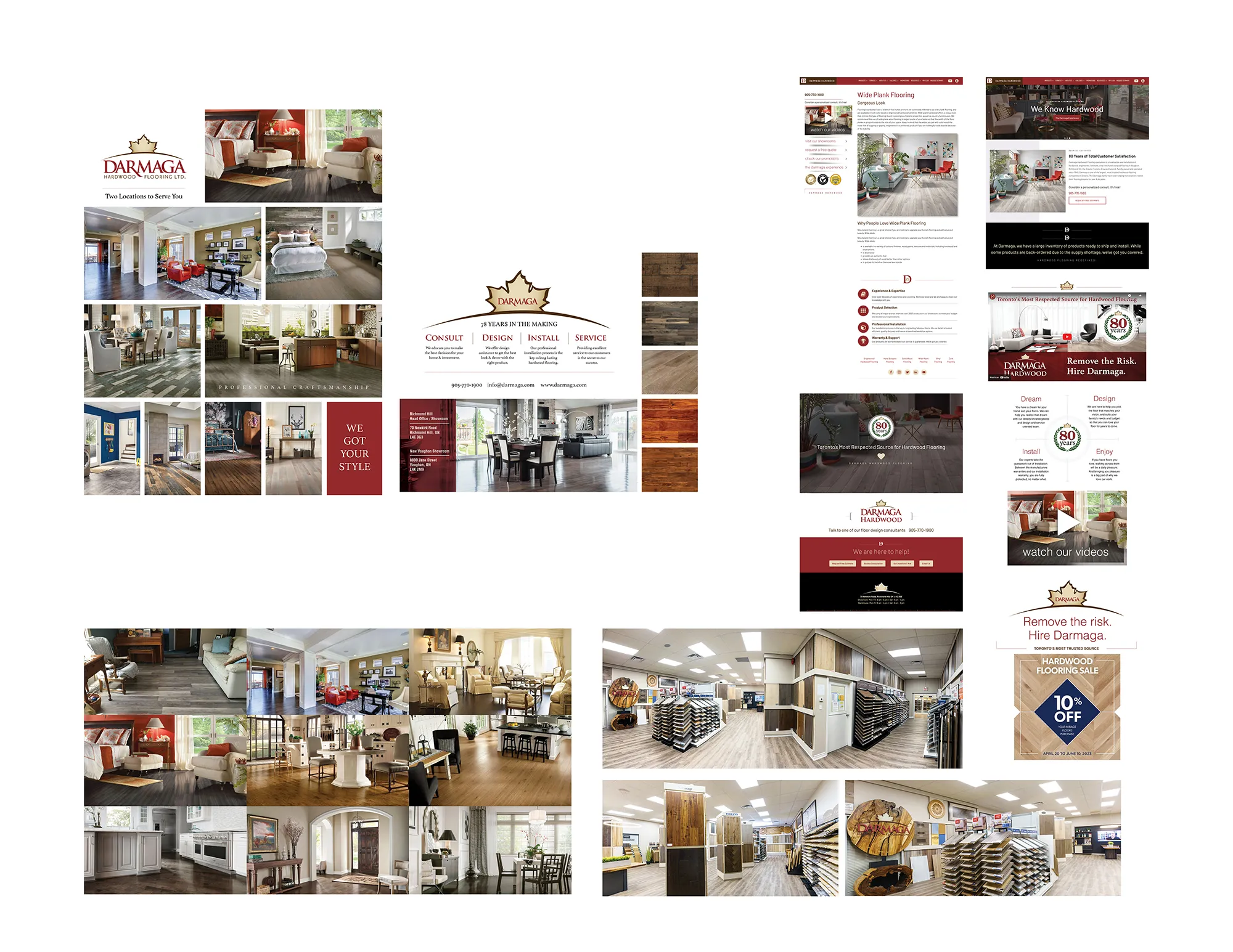
Homeowner Education Instead of Promotions.
Most of the strategy ran on teaching, because a claim about quality is worthless until the buyer can check it for themselves.
Rather than running promotions, we built content explaining the difference between a low-cost flooring solution and a properly specified one: how the materials, the fasteners, the installation method and the product selection determine what the floor does in year five, and why squeaking, movement and premature wear are consequences of decisions made at purchase rather than bad luck.
A homeowner who understands that has stopped comparing quotes. They are comparing outcomes, and Darmaga wins that comparison.
Marketing as a Sales-Support System.
The sales team did not see the point at first, and it is worth saying so, because that is the normal reaction and pretending otherwise would make this story less useful.
What changed their view was accumulation. A campaign brought better-qualified leads. A landing page answered an objection before the call. An educational video meant a customer arrived already understanding why the quote read the way it did. Search work brought people who were looking for the thing Darmaga was best at rather than the cheapest option available.
Marketing stopped being promotion and became a sales-support system, which is the only definition of marketing that survives contact with a sales floor.
From Lead Capture to Invoicing.
Marketing that works produces a problem: more leads arriving than the back office was built to absorb.
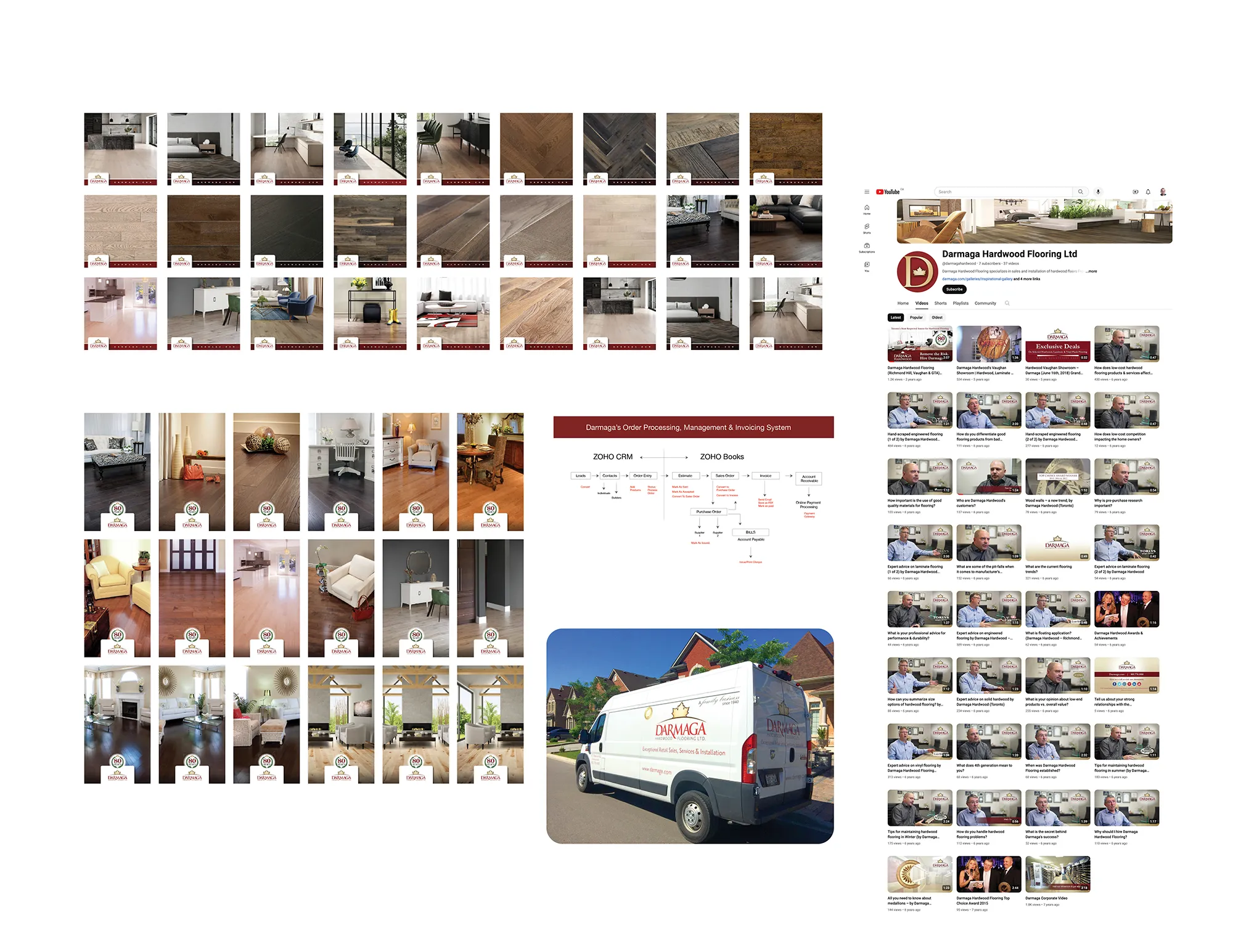
So the work extended into operations. We supported a connected order-processing, management and invoicing workflow running from CRM and lead capture through order entry, estimates and sales orders into invoicing, accounts receivable, purchase orders to suppliers, payment processing and accounts payable.
That work belongs to Infrastructure, the part of the Brand-to-Revenue Performance System most agencies will not go near. Darmaga is the clearest example in our work of all four domains running at once: Foundation in the repositioning, Execution in the content and video, Growth in the search and lead generation, Infrastructure in the operating workflow underneath. Most engagements use two. This one used the whole architecture, which is why brand, sales, operations and customer experience ended up connected rather than merely coordinated.
One Partner Instead of Several Suppliers.
Instead of managing disconnected suppliers, Darmaga had one team that understood the brand, the customer, the market, the product, the sales process and what the company believed about its own work.
Nothing had to be re-briefed. Nothing arrived contradicting something else. The brand presence across digital, social, video, search, print and every customer-facing conversation was consistent because it was all being drawn from the same place.
A brand promise the operation cannot keep is an expensive way to disappoint people. The work here was to build both halves and connect them.