(01) Why It Matters
Twelve Years as Their Marketing Department
Alfred builds hardware for the smart lock and home access market, at the top of that category. For twelve years we have been their branding, marketing and advertising arm, which means their own team spends its time on global business development rather than on managing agencies.
That arrangement did not start this way. It began as a vendor relationship and became something else, which is the only way it could have survived that many product launches, market expansions and platform changes.
The commercial argument for it is simple. A hardware brand at this level touches a customer through packaging, a retail shelf, two consumer storefronts, a wholesale portal, a trade show booth and a social feed. Split that across specialist agencies and someone has to spend their week holding it together, and the brand still arrives at each touchpoint slightly different from the last.
The Three Challenges.
Three obstacles were slowing growth at once.
The first was physical. Showing customizable architectural hardware the traditional way meant renting warehouse studios, buying physical doors, and hiring crews to install hardware on them before a single frame could be shot. Every finish, every configuration, every new combination started that process over. The cost was significant and the delay was worse, because a launch cannot wait for a studio booking.
The second was structural. Alfred needed to expand into B2B without diluting the consumer retail experience that had built the brand. Those two audiences want opposite things. A homeowner wants reassurance and design. A distributor wants availability, margin, specification detail and a fast route to an order.
The third was consistency. Packaging is governed by technical print specifications with no tolerance for error. Digital is governed by nothing of the kind. Holding one brand standard across both, through several agencies each seeing only their own piece, was producing friction rather than output.
One Partner for Every Touchpoint.
Consolidation meant every creative and technical requirement running through one partner, so that consistency stopped being a coordination problem and became a default. Removing the bottleneck meant abandoning traditional product photography rather than trying to make it faster.
Alongside both, we built a segmented digital architecture with separate routes for consumers and for wholesale partners, so that serving one audience better never came at the cost of the other.
This is the Brand-to-Revenue Performance System doing what it was built to do. Foundation settles the standard once. Execution produces against it, from the packaging to the 3D compositions to the trade show wall. Infrastructure carries the storefronts and the wholesale portal. One team reading from one strategy, so the output of each part becomes the input of the next instead of a handoff between suppliers who have never met.
3D Visualization Instead of Photography.
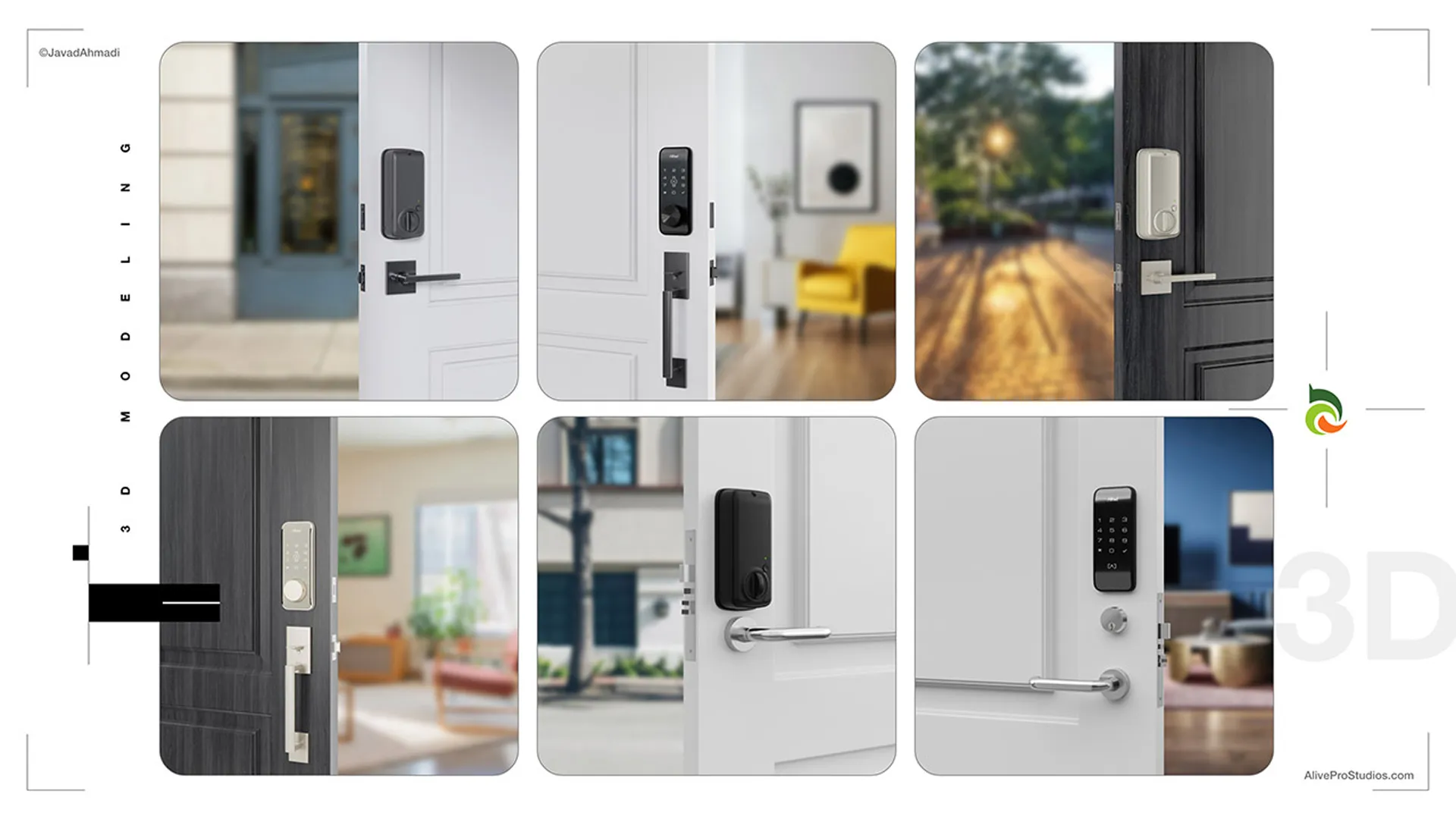
We model Alfred's hardware in 3D and composite it onto virtually constructed doors, which means any combination of product, finish and door style can be produced on demand without a studio, a physical door or an installer.
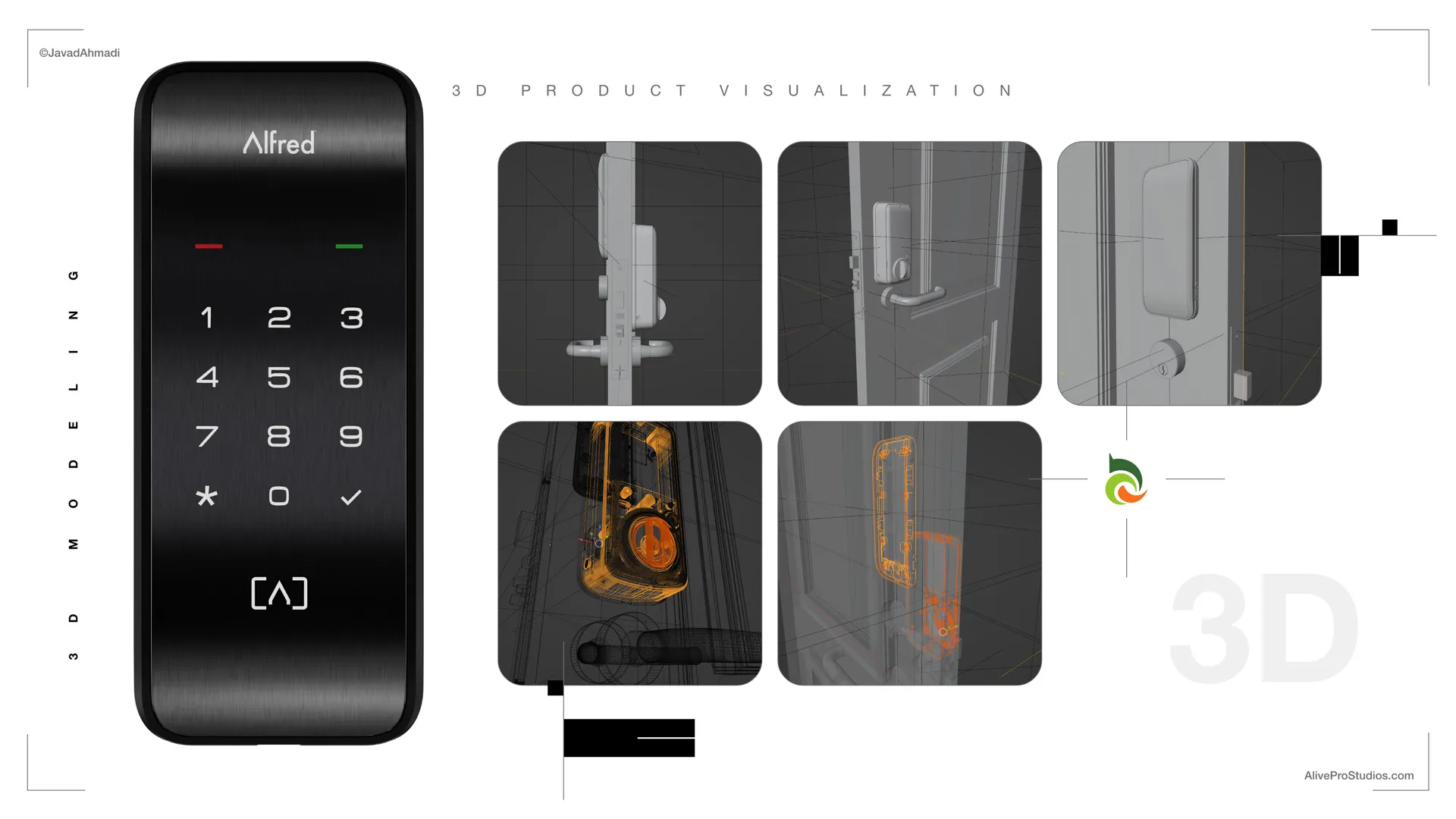
This is the change that pays for the relationship. A builder or developer asking what a specific configuration looks like on their specific door used to be a project. It is now a request. Launch imagery is ready before production units exist, a new finish does not trigger a reshoot, and the same assets carry through packaging, both storefronts, the B2B portal and the trade show wall.
Retail Packaging and Combo Kits.
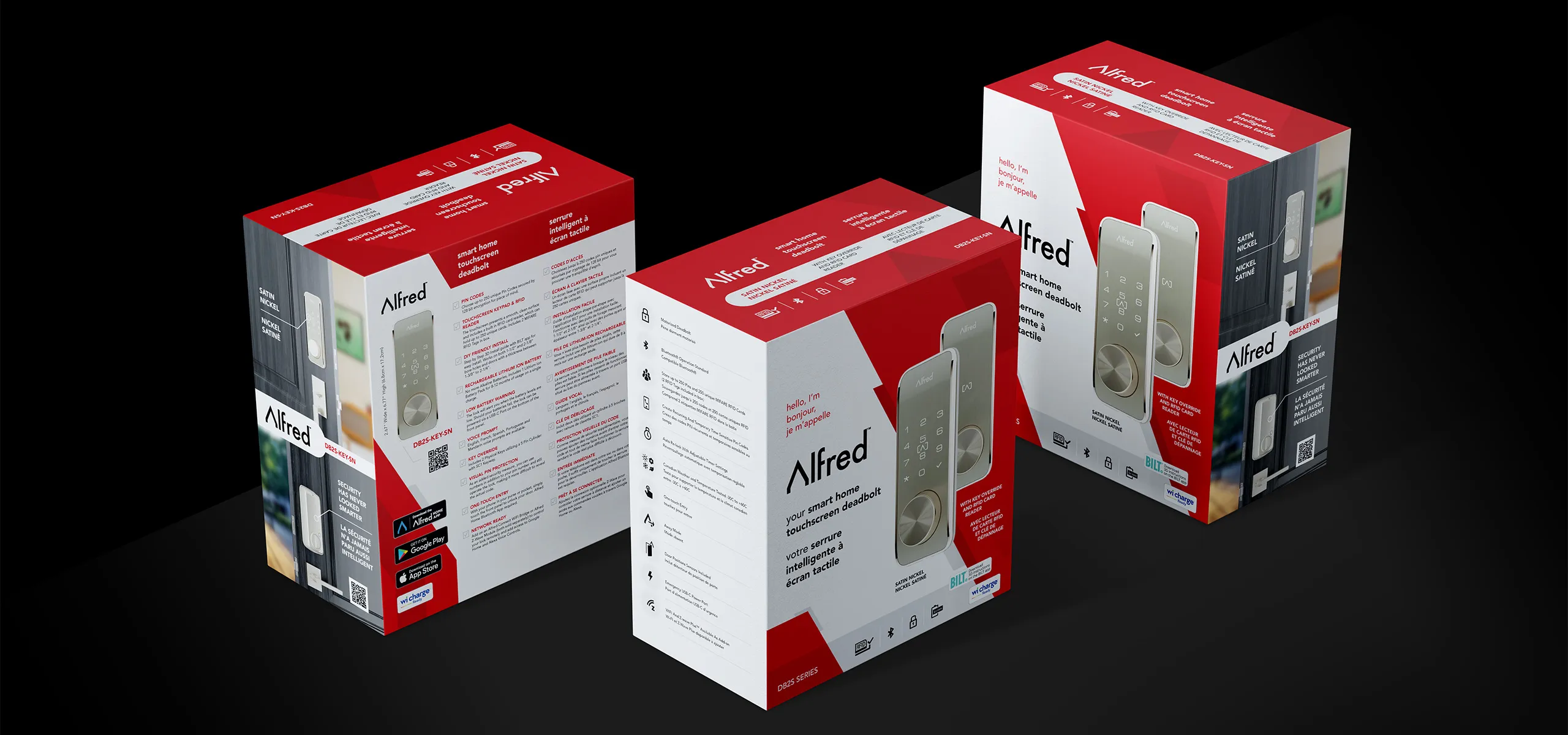
Retail packaging and the Combo Kit boxes are engineered rather than designed, because a tactile finish at this level has to survive complex print production without drifting from the brand guidelines. The box is also the last thing that speaks for the product before someone buys it, and the first thing they handle after. We treat it accordingly.
Two Shopify Stores and a Wholesale Portal.
We manage, optimize and maintain two Shopify storefronts, one for the Canadian consumer market and one for the United States, each tailored to its own market rather than sharing a compromise.
The wholesale audience gets its own site, designed and maintained for what distributors actually need, with ongoing optimization and onboarding as new partners come on. Separating them is what lets the consumer experience keep its standard while the B2B channel grows.
Sell Sheets, Trade Shows and Social.
Around all of it sits the material a sales conversation needs: sell sheets, trade show graphics, looping exhibition video including the brand's presence at CEDIA, and a continuous stream of social content. None of it is glamorous. All of it is why the brand shows up the same way in a booth in Denver and on a phone in Toronto.
What Twelve Years Changed.
The move to a 3D-first visualization strategy eliminated the cost and the calendar of physical set production outright, and replaced a process measured in weeks with one measured in days. Highly specific compositions that were previously not worth producing are now routine, which changes what the sales team can offer a builder in a first conversation.
The consolidation removed the overhead of multi-vendor management and the inconsistency that comes with it. Across that time the brand has scaled its retail footprint and its B2B share while presenting one standard everywhere it appears.
A company that can stop thinking about its marketing is a company that can spend that attention on its market. That is what twelve years has actually bought.