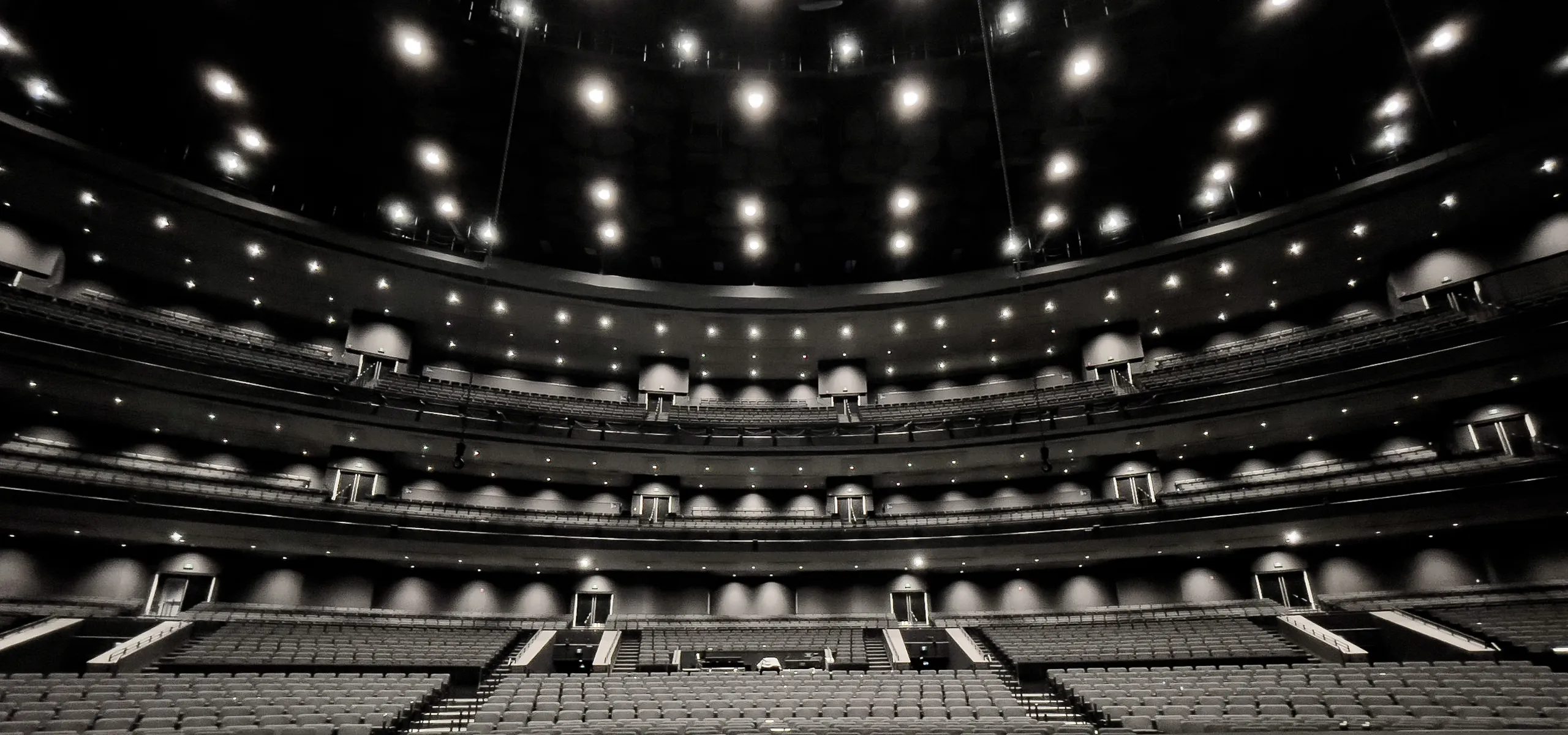
(01) Why It Matters
Twenty-Nine Years of Keeping a Brand Current
Brading Specialty Shades builds custom window treatments and automated shading systems for private residences and landmark commercial spaces, including the Aga Khan Museum and the OLG Theatre. They work directly with the client and the project, which makes them a separate business from BFL, the trade supplier we also work with. They have been our client since 1997, the year we opened, which makes them the second-oldest relationship the company has.
Twenty-nine years is long enough that the usual marketing questions stopped applying a long time ago.
Brading runs at capacity. A company in that position does not need lead generation, and running it anyway would waste their money and distract from the work. What they need is harder to buy and harder to fake, which is a brand that keeps pace with the calibre of what they install.
An Audience of Architects and Designers.
The audience is the difficulty. Architects, developers and interior designers assess a supplier the way they assess a material, on evidence and on taste, and they are professionally equipped to notice when something is slightly off.
That audience cannot be persuaded by claims. It can only be shown. Which puts the entire burden on how the work is captured and presented, in a category where the work is difficult to photograph: large rooms, mechanisms designed to be invisible, and detail that only reads when the light is right.
The second difficulty is time. An identity that was correct in 2005 is a liability in 2015. A company whose proposition is contemporary architectural sensibility cannot present itself in a brand that has aged, and nobody inside the business notices the drift, because they see it every day.
Brand Position Instead of Advertising.
We left advertising out of it and put everything into brand position and visual storytelling, on the principle that the portfolio should carry business development rather than a campaign.
That is a deliberate use of the Brand-to-Revenue Performance System rather than an exception to it. The system is an architecture, not a package, and Brading is the clearest proof of the difference: Foundation and Execution carry almost the entire relationship, while Growth sits idle by design, because a company turning work away does not need a funnel. Two clients can run the same system and share almost no line items.
Alongside that we treat the identity as something to be evolved rather than owned. Over twenty-nine years we have taken Brading through three to four full rebrands, each aligning the company with where architectural taste had moved, most recently into the identity they carry now.
Rebranding a company that often is not indecision. The Brand Core underneath has not moved in three decades. What changes is its expression, and expression is the only part of a brand that has to look current in a business where looking current is the product.
A Lookbook, Not a Sales Document.
Their B2B brochure is built as a lookbook rather than a sales document, because the buyer is a designer and the format has to respect that. Its job is to sit on an architect's desk and make the case through Brading's best-known projects, without asking anyone to read a paragraph about quality.
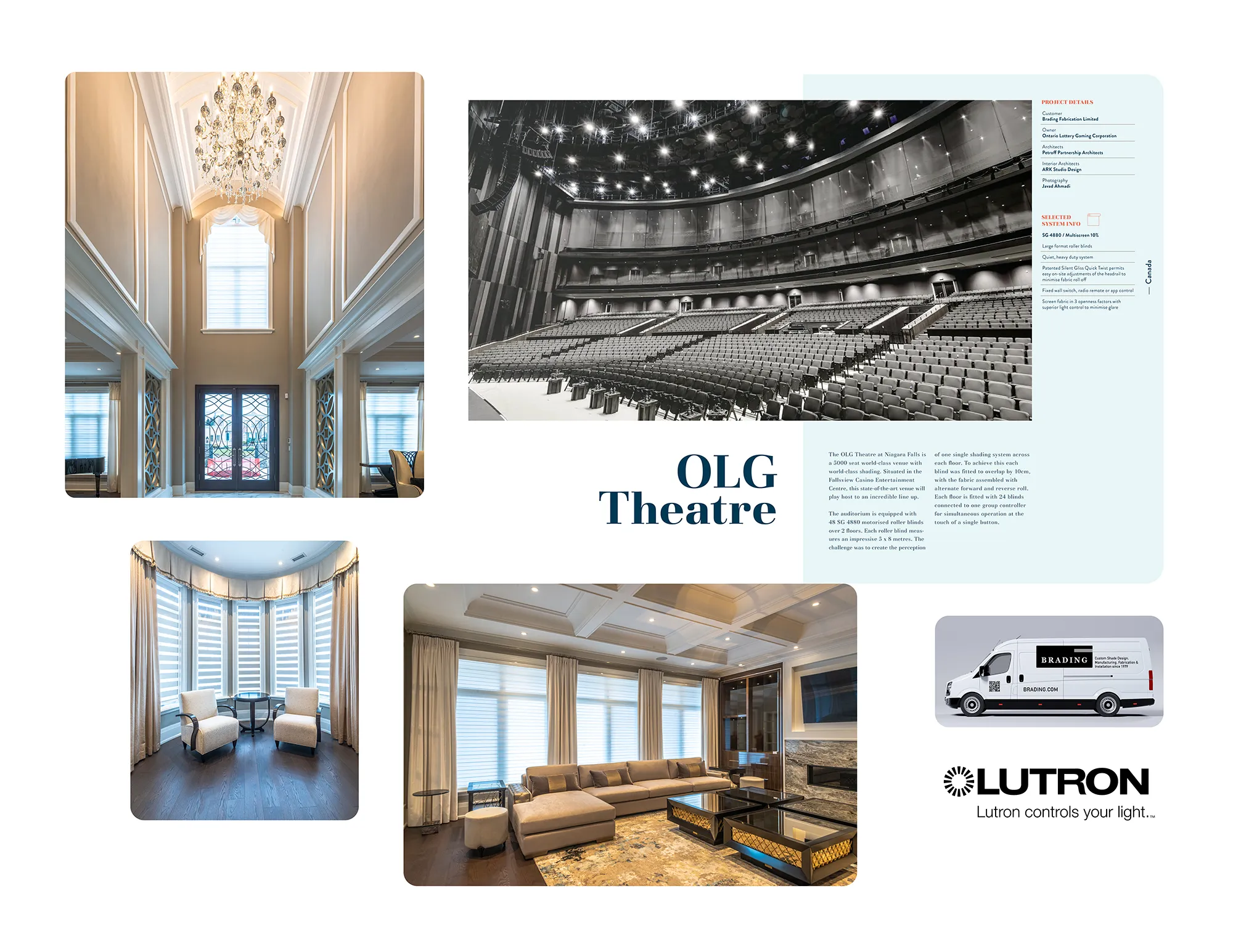
Cinematic Production and Photography.
We built a production framework for capturing installations properly: cinematic video and photography of the key properties, shot to hold both the scale of a space and the detail of the mechanism, including the Lutron integrations that make the systems disappear into the architecture.
This carries the most weight of anything we produce for them, because it is the only way an architect who was not in the room can assess what Brading does.
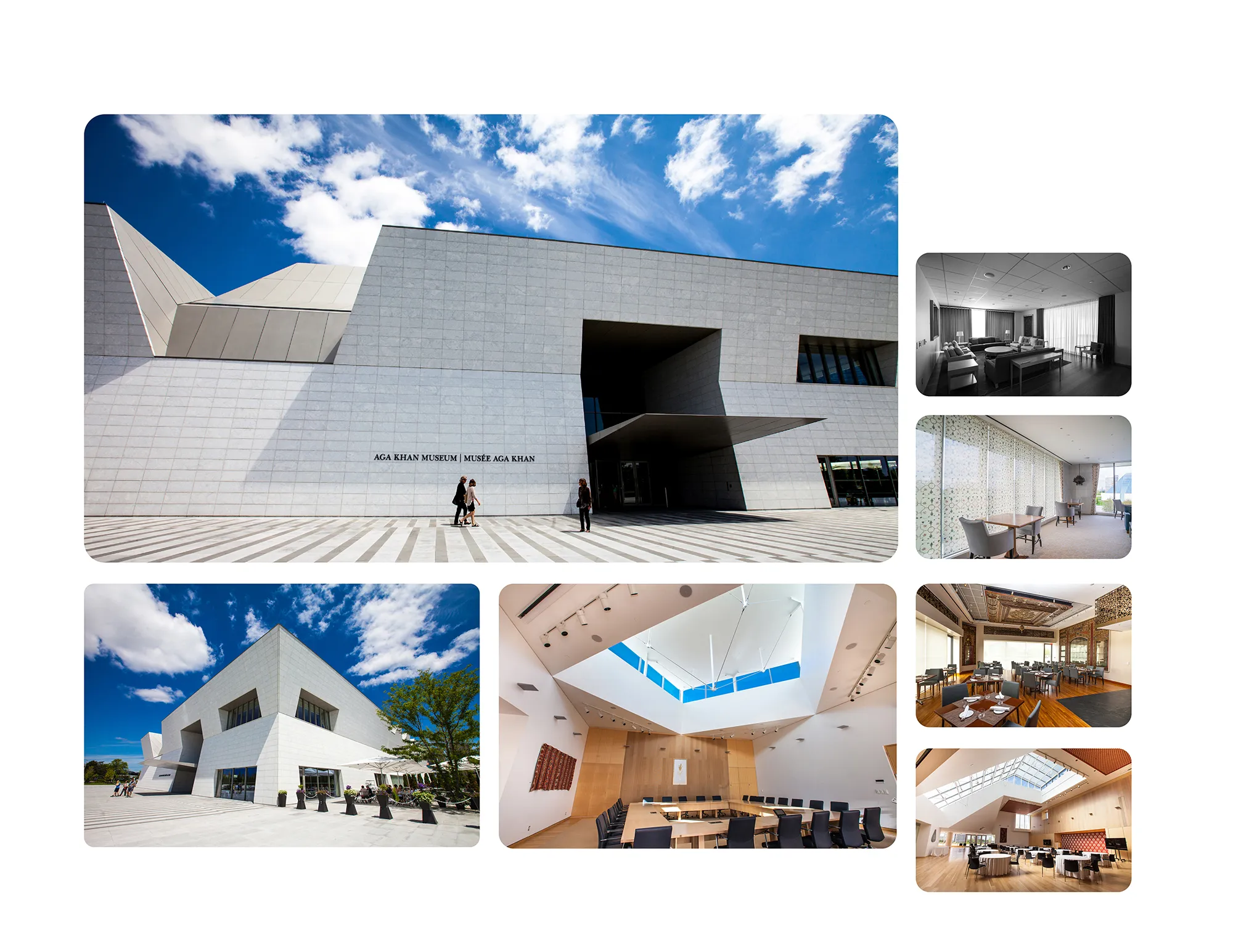
Websites and Digital Properties.
We designed, built and maintain all of Brading's corporate websites and digital properties, so the standard set by the brochure and the production work holds at the point where most first impressions now happen.
Two Award Entries, Two Wins.
Brading recently entered two of their key projects for industry awards and won both. The photography and video narratives we produced carried those submissions, which is the clearest available measure of the work: not that it looked good, but that it persuaded a jury of people who assess this category for a living.
The rest of the result is harder to point at and worth more. Fragmented marketing is expensive because nothing accumulates, and each new vendor starts over. Twenty-nine years with one partner is the opposite arrangement. Every rebrand inherited the one before it. Every shoot built on a framework already proven on the last property. Every website started from an identity that was already resolved. None of that work was paid for twice.
A brand that never stops being current is not a project. It is a standing arrangement with someone who will tell you when it is time.